Services · Platform & Operations
MLOps, LLMOps, and Platform Engineering
The infrastructure that keeps AI working after go-live
What this is
What mlops, llmops, and platform engineering covers
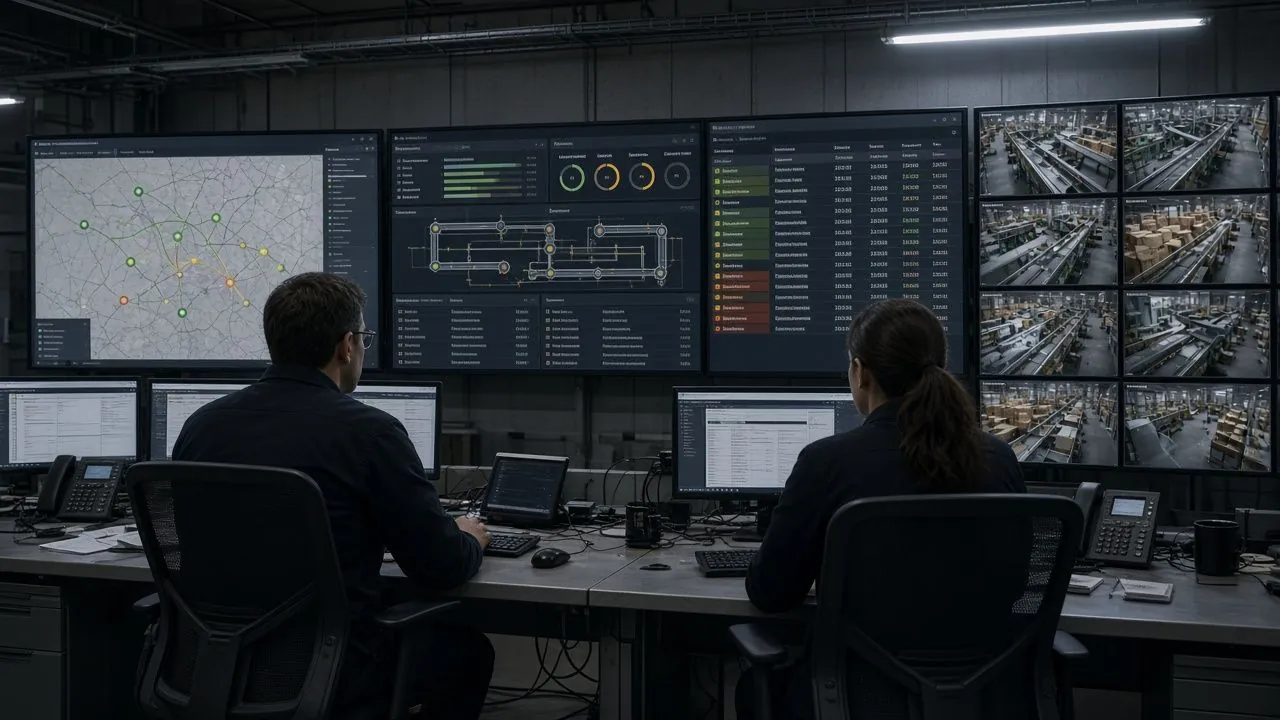
MLOps and LLMOps for platform teams that have models in production but no reliable way to evaluate, deploy, monitor, or roll them back. We build the CI/CD, evaluation gates, observability, and cloud architecture around your AI workloads, including the Kubernetes, Terraform, and cost controls the rest of the stack needs. Cloud architecture and DevOps engagements now run under this service.
Typical timeline: 6–12 weeks
Who hires us for this
- Platform and SRE leads inheriting AI services with no runbooks
- Data science teams whose notebooks became production without a deployment path
- CTOs consolidating cloud spend across AI and non-AI workloads
Problems we get hired for
What usually goes wrong before we are called
A prompt change broke production and nobody noticed for a week
Eval gates in CI block deploys that regress on the golden set. Drift dashboards alert on agreement rate and latency, not only on uptime.
GPU bills nobody can explain
Per-team cost attribution, autoscaling with scale-to-zero for bursty inference, and right-sizing reviews. Terraform makes the environment reproducible.
Rollback means redeploying from someone's laptop
Versioned prompts, models, and configs with one-command rollback. Blue-green or canary deploys for model swaps.
How the engagement runs
Steps and the artifact each one produces
- 01
Assessment
Inventory of models, pipelines, environments, and gaps against a production checklist.
Artifact: Gap report and prioritised backlog
- 02
Foundations
Infrastructure as code, CI/CD, secrets, and observability baseline.
Artifact: Terraform modules and pipelines
- 03
AI-specific gates
Eval suites in CI, prompt and model registries, drift monitoring, and rollback paths.
Artifact: Eval gates and dashboards
- 04
Handover
On-call runbooks, cost reports, and a quarterly platform review.
Artifact: Runbooks and cost dashboard
Stack
Tools we reach for
Chosen per engagement against your existing platform. Nothing here is mandatory; everything here has shipped.
| Infrastructure | Kubernetes · Terraform · AWS, Azure, GCP · NVIDIA GPU Operator |
|---|---|
| CI/CD | GitHub Actions · ArgoCD · Promptfoo eval gates |
| Registries | MLflow · Hugging Face Hub (private) · Versioned prompt store |
| Observability | OpenTelemetry · Langfuse · Prometheus and Grafana · PagerDuty |
| Orchestration | Temporal · Airflow · Kafka |
What you receive
Deliverables
- Gap report against a production checklist
- Infrastructure as code and CI/CD pipelines
- Eval gates, registries, and rollback paths
- Drift and cost dashboards
- On-call runbooks
Proof
Where this has run
Banking
Durable AI Ops Layer for Mid-Market Banking
KYC exceptions and payment repairs on Temporal + Vercel AI SDK + MCP: maker-checker Signals, PII redaction, zero double-posts on core retries.
Payment exception handle time: 45–90 min median → 12–25 min median
Crypto / FinTech
Durable AI Ops Layer on Multi-Venue Exchanges
Desk copilots that turn natural-language intent into HITL-approved exchange orders (Vercel AI SDK, Temporal, and MCP) without YOLO trading bots.
Ticket prep time (desk): 15–40 min / intent → 2–5 min review
Products that ship inside this service
- Xenith LLM Platform · Model routing, caching, and cost controls between your apps and every LLM provider.
- Xenith Private AI · Open-weight LLM stack inside your VPC or air-gapped network.
Engagement models
How we can be hired for this
| Model | Shape | Typical duration |
|---|---|---|
| Fixed-scope pilot | Defined workflow, defined integration points, defined exit metric. Priced as a project. | 4–12 weeks |
| Production retainer | Monthly capacity for evals, monitoring, model refreshes, and new workflows. Month-to-month. | 3+ months |
| Embedded pod | One architect plus two to four senior engineers working inside your repos and rituals. | 3–9 months |
Pricing and phase gates are described on How we work.
Questions buyers ask
Frequently asked questions
- Do you also handle non-AI cloud architecture?
- Yes. The same Terraform, Kubernetes, and CI/CD foundations serve the rest of the platform. Former cloud architecture and DevOps engagements are delivered under this service.
- What is an eval gate?
- A CI step that runs the golden question or case set against the new prompt or model and fails the build if quality drops below a threshold. It is the AI equivalent of a failing unit test.
- Can you work inside our existing cloud accounts and tooling?
- That is the default. We add modules and pipelines to your repos and use your identity provider and secrets manager. Nothing runs in a Xenqube account.
- How do you measure drift for LLM features?
- Agreement rate against operator decisions, eval-set score on a schedule, latency and cost per request, and override reasons. Alerts fire on trend, not on a single bad day.
When this is the wrong fit
- Teams with one prototype and no production traffic; start with the agent or LLM service instead.
- Organisations looking to outsource all operations permanently; we hand over to your on-call.
Next step
Send the workflow. We reply with an architecture sketch.
Describe the queue, the system of record, and who signs off today. First brief is free; NDA first if you prefer.