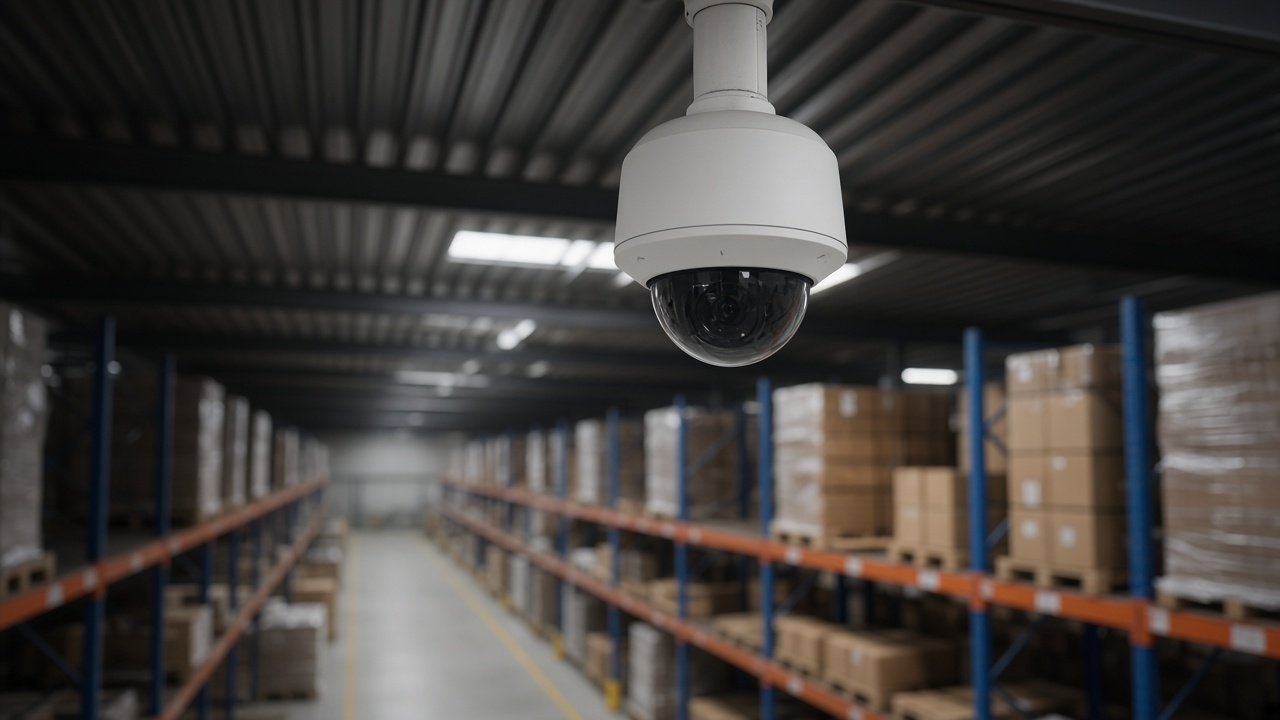
Most plants and warehouses we walk already own cameras. Many already own alert dashboards. Near-misses flash. PPE violations ping. Intake exceptions stack. Then nothing operational changes—because an alert is not an action loop.
The upgrade path is not "buy more models." It is cameras → living spatial model → human-approved action, with rules and approvals owning anything that moves people or equipment. That is the product arc behind Xenith Spatial, and it is how we keep vision programs inside governed AI instead of alert fatigue.
Why Alert-Only Vision Dies Quietly
Computer vision demos look great in week two. Precision looks fine on the pilot bay. Safety officers get a new console. Three months later the console is muted.
Root causes we see repeatedly:
- No owner for the next step. Who acknowledges? Who dispatches? Who closes the loop in WMS or EHS?
- No spatial context. A bounding box without a living map of aisles, docks, and exclusion zones forces humans to re-interpret every frame.
- No tiering. Teams jump from PPE detection to "optimize forklift routes with AI" and collapse trust when the optimizer is wrong.
- LLM creep. Someone wires a model to "decide" routes or sirens. That violates Zero-LLM-Trust on safety and physical motion—see Zero-LLM-Trust.
Alert-only vision is a reporting project. Spatial action loops are an operations project.
The Three Tiers That Actually Ship
We refuse big-bang "spatial OS" pitches. Tiers exist so precision can earn the next capability.
Tier 1 — Vision-lite incident reduction
PPE, near-miss, and intake audit from existing cameras. Kafka-style event spine from edge to UI. Human acknowledgment. Measured precision before anyone talks about twins.
This is where most sites should land for 4–8 weeks. If Tier 1 precision is weak, Tier 3 will be a liability.
Tier 2 — Spatial twin freshness and predictive alerts
Detections feed a spatial data model: people, vehicles, zones, dwell. Freshness metrics matter—stale twins are how you optimize yesterday's floor. Predictive alerts stay advisory until HITL policy says otherwise.
Tier 3 — Optimizer proposals with approval gates
Now you may propose congestion relief, staging changes, or task prioritization. Proposals only. Rules and humans approve. LLMs do not route forklifts. Deterministic optimizers and policies may suggest; execute paths stay gated.
That ladder matches Connect → Shadow → Assist thinking we use on sortation and yards (shadow mode before assist). Shadow the optimizer long enough to measure false positives before Assist touches a WMS or fleet API.
Eyes, Brain, Action—Without Rip-and-Replace
Spatial programs fail when they try to become the new WMS, WCS, or EHS system of record. Integrate-don't-replace: cameras and CV sit beside control and warehouse systems; the action loop writes only through approved connectors. We unpack the broader doctrine in integrate, don't replace.
A clean mental model for logistics and manufacturing sites:
- Eyes — existing CCTV + edge detections
- Brain — spatial twin + rules + optional agent narration (Xenith Agents)
- Action — HITL approval → WMS/EHS/WCS tools
Pair Spatial with Xenith Sort in CEP hubs when chute and parcel exceptions need both camera context and WCS grounding. Pair with Xenith Twin when cell OT state and spatial floor state must coexist without pretending CAD is live truth (digital twin ≠ 3D model).
Camera Audit Before the SOW
The unglamorous work decides ROI. Before we sign a vision-lite pilot, we push a camera audit checklist:
- Coverage of docks, aisles, induction, and high-risk crossings
- Lighting and glare at the hours that matter
- Resolution and FPS vs. the classes you claim to detect
- Retention and privacy constraints for person classes
- Network path from edge to event spine
- Who owns false-positive tuning after week one
If the SOW skips this, you are buying a model and hoping the ceiling cameras cooperate. They often do not.
What HITL Looks Like in Practice
Human-in-the-loop is not a rubber stamp UI. It is RBAC, evidence, and time budgets.
- Operator sees clip + spatial pin + rule ID
- Policy defines which classes auto-page vs. queue
- Supervisor approval required for any automated physical or system write
- Append-only audit of detection → decision → action
- Optional seal/proof layer via Xenith Seal when regulated sites need non-repudiation
Safety officers should feel the system reduces near-miss blindness without creating a second silo they must babysit. Ops directors should see a path from spatial context to throughput decisions without surrendering the floor to a black box.
Metrics That Matter (and Ones That Don't)
Track:
- Precision/recall on Tier 1 classes that safety cares about
- Median time from detection to acknowledgment
- Percent of alerts that produce a closed action
- Twin freshness / lag
- Optimizer proposal acceptance rate in Shadow
Do not track:
- "AI adoption" of the dashboard
- Unlabeled demo accuracy from synthetic video presented as site ROI
- Autonomy percentage as a vanity KPI
Synthetic feeds are fine for MVP demos. Label them. Expand tiers only when measured precision on your cameras supports it.
A 90-Day Path That Survives Contact with the Floor
Days 1–30: camera audit, Tier 1 rules, Shadow logging, no writes.
Days 31–60: harden precision, introduce spatial twin canvas, still advisory.
Days 61–90: first Assist writes on the lowest-risk action class only—never forklift routing on day 61.
This is slower than a keynote. It is how industrial AI vision programs stay on after the pilot party ends.
If your cameras already scream and your operations still whisper, you do not need another alert tile. You need a spatial action loop with humans on the irreversible steps.
Xenith Spatial turns existing cameras into a living twin and HITL action loop—rules route equipment, not language models.
Request an architecture brief → · Xenith Spatial → · Industrial AI →