Invisible UX: How Web2 Users Will Adopt Web3 Without Knowing It
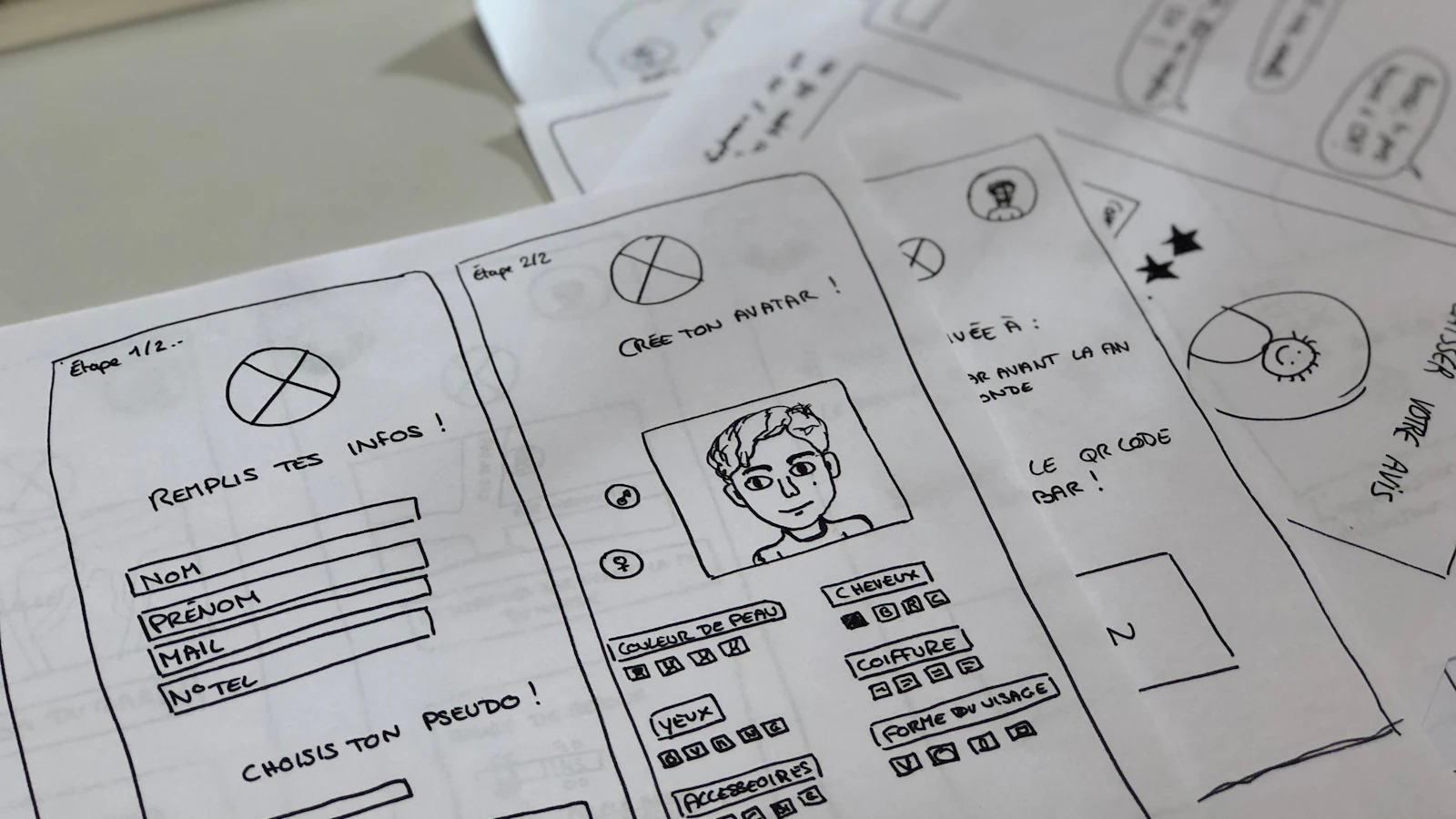
"Web3 will only win when users forget they are on a blockchain."
The Seed Phrase is the greatest barrier to mass adoption in history. Asking a non-crypto user to manage 12 words, buy native tokens for gas, and sign hexadecimal "blobs" is a UX nightmare. If we want the next billion users, we have to stop building for "degens" and start building for humans.
At Xenqube, we call this approach Invisible UX — the discipline of designing Web3 applications where the blockchain is present but never visible to the end user. The power is there. The complexity is not.
Why the current onboarding flow fails
The standard Web3 onboarding sequence looks like this: install a browser extension, write down 12 random words, buy ETH from a centralised exchange, transfer it to your wallet, approve a token contract, then finally execute the action you came here to do. Six steps before a single unit of value moves.
Compare that to a Web2 payment: enter card details, tap "Pay." Two steps. That gap is not a technical limitation — it is a design choice. And it is a choice we can undo.
The 3 Pillars of the "Bridge of Silence"
Xenqube's framework for invisible Web3 UX is built on three engineering primitives that, when combined, produce an experience indistinguishable from a standard Web2 product.
Users should log in with Google, email, or FaceID. The "Wallet" exists, but it is a smart contract running silently in the background.
ERC-4337 separates account ownership from transaction execution. A smart contract account can hold rules: spending limits, guardian recovery, session keys, and social login — all without the user ever seeing a private key or a seed phrase.
Implementation: Privy, Dynamic, or Biconomy Smart Account SDKs. The user signs with their social identity; the smart account executes the on-chain action.
Why force a user to buy ETH just to send a stablecoin? The application should sponsor the gas or allow payment in the asset being moved.
ERC-4337 Paymasters are contracts that intercept the gas payment and cover it on the user's behalf. The application can sponsor gas entirely, or accept payment in ERC-20 tokens (pay with USDC for a USDC transfer).
Implementation: Biconomy, Pimlico, or Stackup Paymaster services. Gas sponsorship rules are configurable by transaction type, user tier, or spend limit.
Stop asking users to "Swap on a DEX." Ask them to "Get 100 USDC." The backend handles the routing, slippage, and bridging.
Intent-Based systems accept a user's desired outcome and solve for the best execution path. The user never chooses a DEX, sets slippage tolerance, or approves a router contract. They state what they want; the system delivers it.
Implementation: 1inch Fusion, CoW Protocol, UniswapX, or custom intent-settlement infrastructure. The front-end collects the intent; a solver network executes it.
The Xenqube approach: frictionless entry points
When we apply our 51-Hour Framework, we are not just shipping "code." We are shipping frictionless entry points. Speed is a liability if the user experience is a hurdle.
We build apps that feel like Web2 but carry the sovereign power of Web3. Every sprint defaults to an invisible UX architecture: smart accounts, sponsored gas, and intent-driven flows. These are not optional upgrades — they are our baseline.
The ultimate goal: A user completes a cross-border remittance or buys an RWA-backed token and says: "That was easy" — without ever realising they just interacted with a decentralised protocol.
That moment is when Web3 wins. Not when the price of ETH goes up — when the experience of using it becomes unremarkable.
What this looks like in production
Invisible UX is not a prototype concept. It is production-ready today. Here are the integration patterns Xenqube uses:
- Login: Privy or Dynamic handles social login → smart account creation → session key issuance. The user sees a standard OAuth screen.
- Payments: Paymaster covers gas for the first N transactions or up to a spend threshold. Users never see a gas prompt.
- DeFi actions: Intent is captured ("swap USDC for USDT"), sent to a solver, and executed at best price. The user sees a simple "Done" confirmation.
- NFT minting: The user clicks "Claim." Behind the scenes: smart account is funded, gas is sponsored, mint transaction is signed via session key, and the token appears in the user's connected identity — no MetaMask, no seed phrase.
The security consideration
Abstracting wallet complexity does not mean abstracting security. Smart contract accounts must be audited. Session keys must have tight expiry and spend limits. Paymasters must have rate limits to prevent gas drain attacks. Solvers in intent systems must be bonded and slashable.
Invisible UX shifts responsibility from the user to the application architect. That is a feature, not a bug — but it demands a higher standard of engineering rigour. At Xenqube, security hardening is not a post-launch task; it is a sprint deliverable.
The market opportunity
Every application that removes one step from the Web3 onboarding flow expands its addressable market by an order of magnitude. Account Abstraction, Gasless Transactions, and Intent-Based Design collectively have the potential to make "crypto" invisible — and that is precisely how it reaches the next billion users.
The question for any Web3 team today is not "should we implement invisible UX?" — it is "can we afford not to?"